News
BRAZILIAN BULL: WHEN POWER MEETS HARMONY
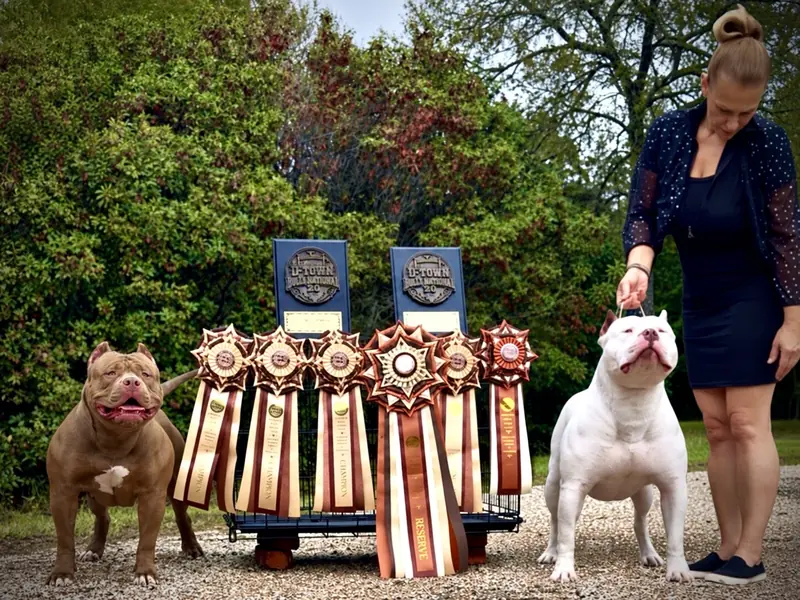
In the world of purebred dogs, there is a fundamental difference between a dog that impresses with its appearance and one that truly stands out for its quality of conformation.
The Brazilian Bull presents a particularly interesting challenge for breeders, handlers, and judges in conformation shows.
We are talking about a breed whose identity is defined by exceptional muscular development, a massive head with substantial cranial volume, a thick and powerful neck, heavily muscled shoulders, a broad chest, and remarkably developed hindquarters.
But this raises an important question:
How can we combine so much power in a single dog without compromising its biomechanical efficiency?
The answer lies in understanding the difference between exaggeration and excellence.
MUSCULAR MASS IS NOT THE SAME AS STRUCTURAL QUALITY
A Brazilian Bull may display extraordinary muscular development while still having significant structural limitations.
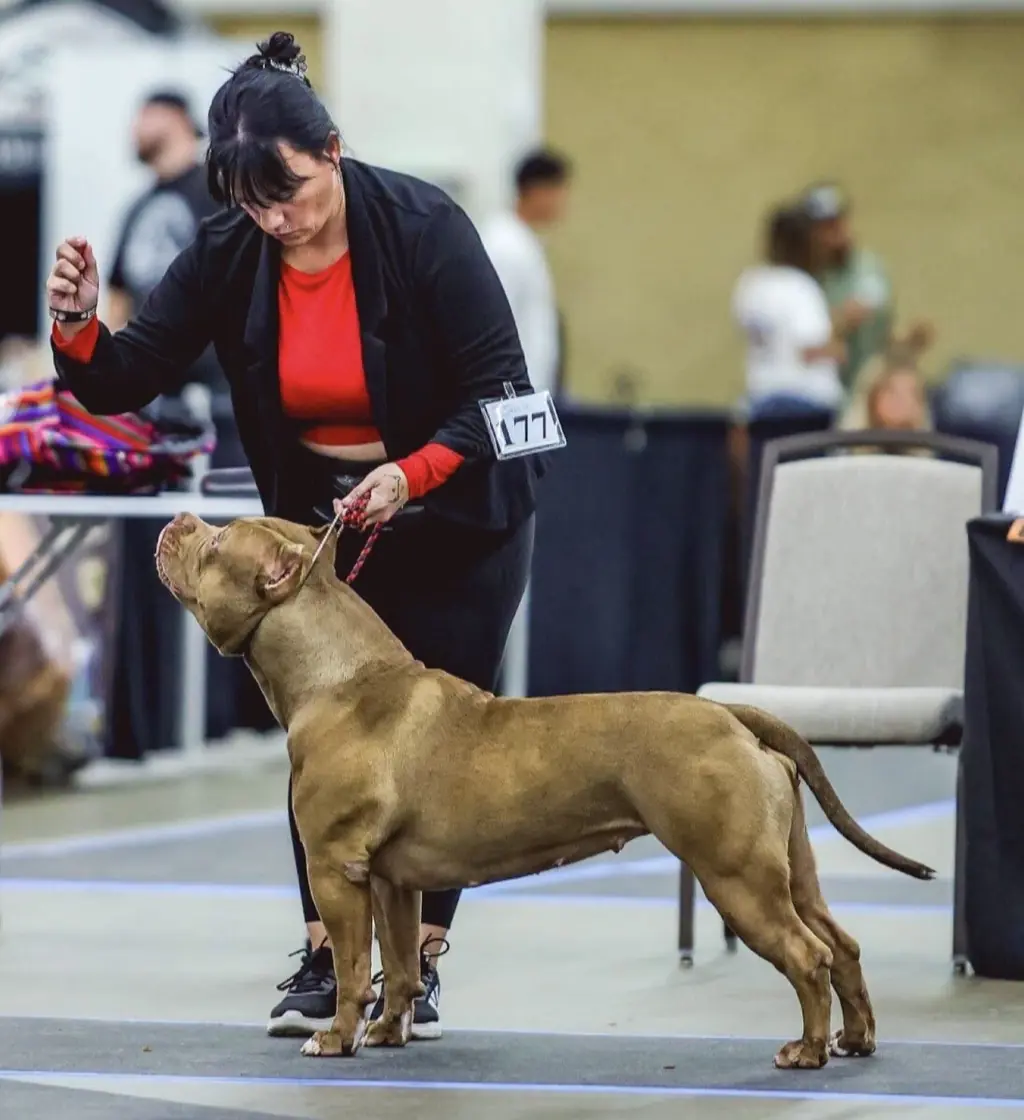
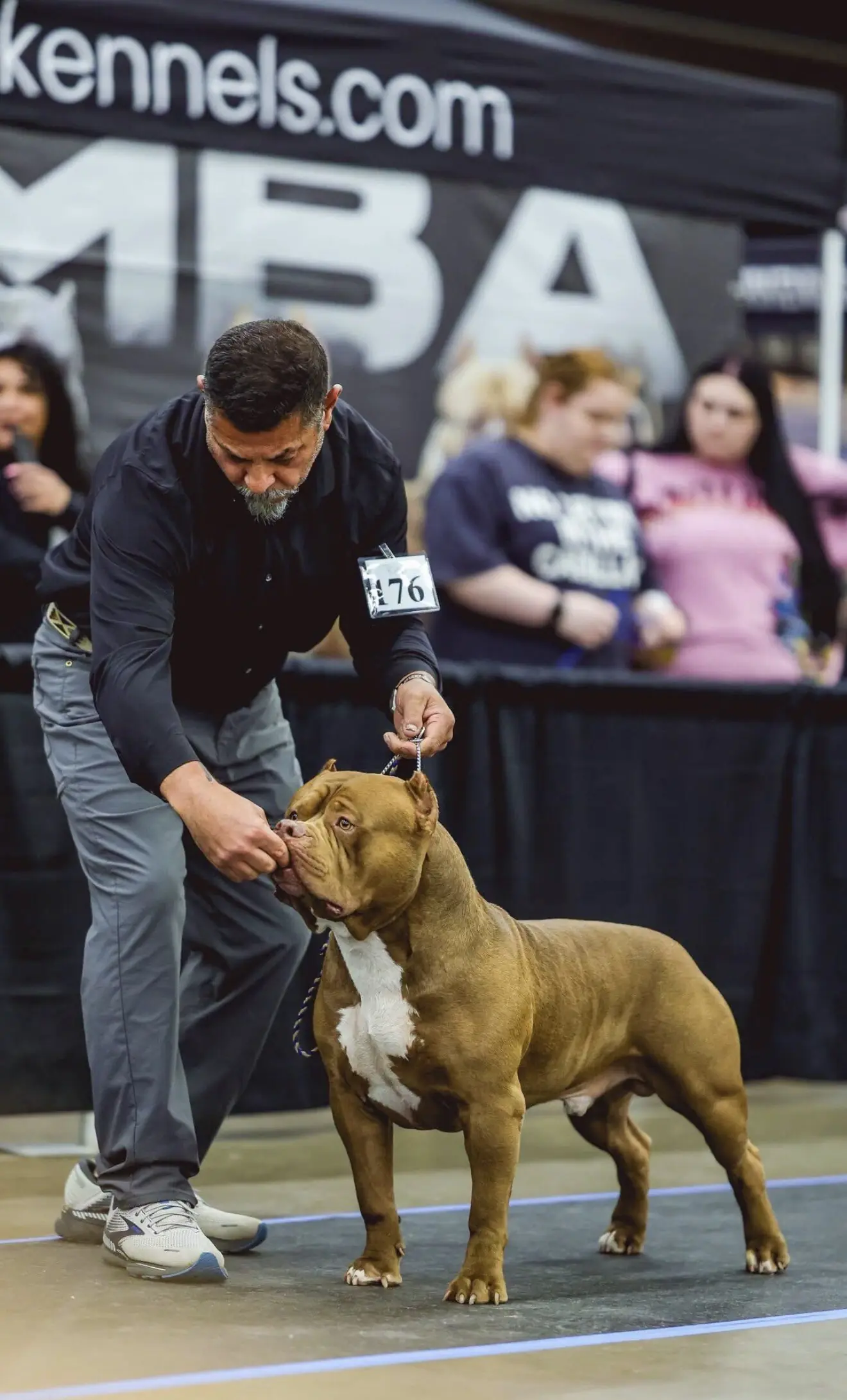
The powerful musculature surrounding the shoulders, particularly the scapular and pectoral regions, must coexist with proper scapulohumeral angulation, correct shoulder placement, and sufficient freedom of movement in the forelimbs.
 (open larger photo)
Likewise, heavily muscled hindquarters require balanced pelvic structure, appropriate stifle and hock angulation, and functional coordination between the front and rear assemblies.
An exceptionally thick and muscular neck must remain harmoniously integrated into the shoulders and withers, just as a massive head must remain proportional to the dog’s overall construction.
The true challenge is not simply producing the greatest possible amount of muscle.
It is developing that muscle over a skeletal framework capable of supporting and moving it efficiently.
Muscle should enhance structural quality, never compensate for structural weakness.
MOVEMENT REVEALS WHAT A STACKED POSE CAN HIDE
 (open larger photo)
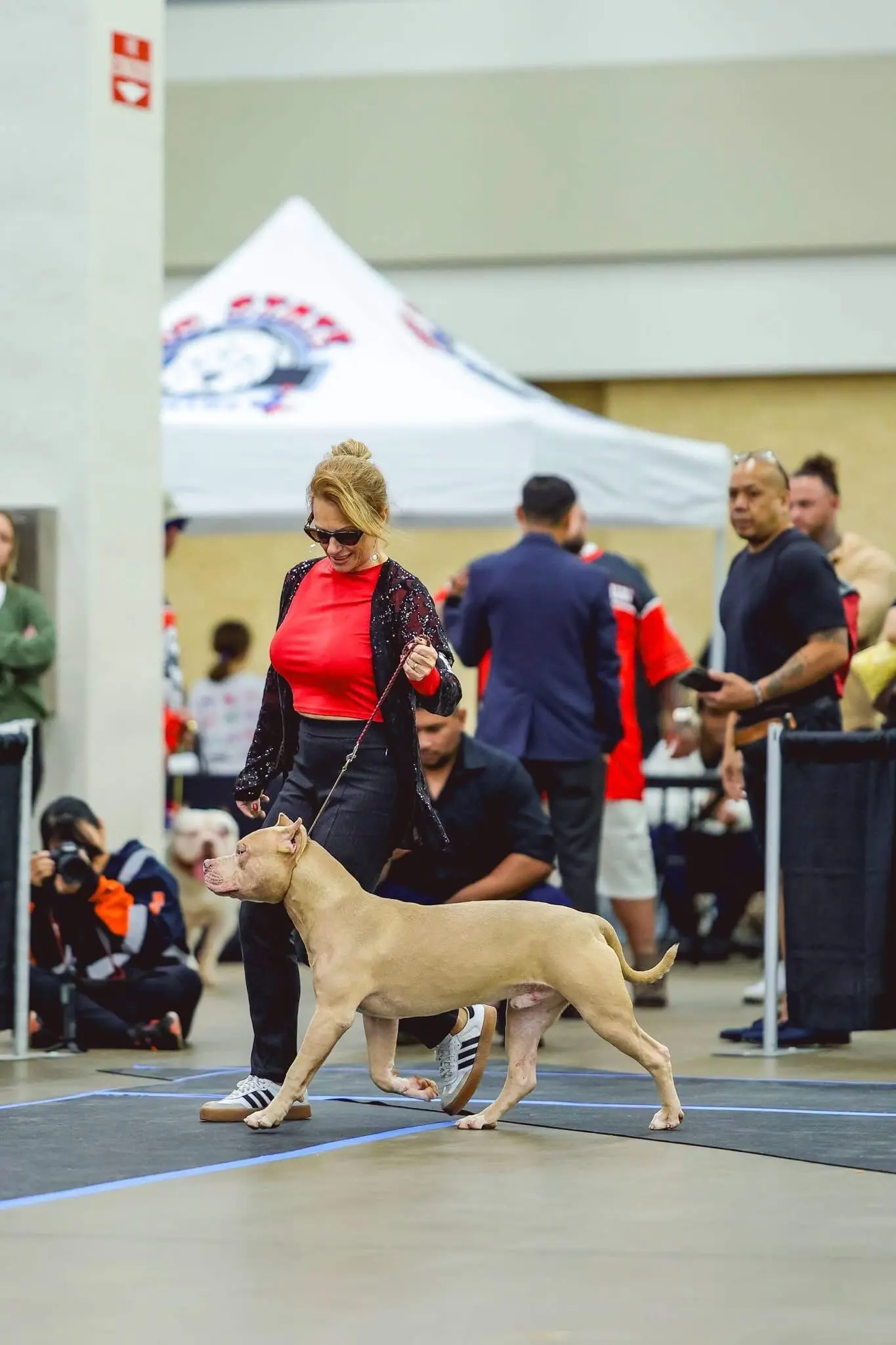
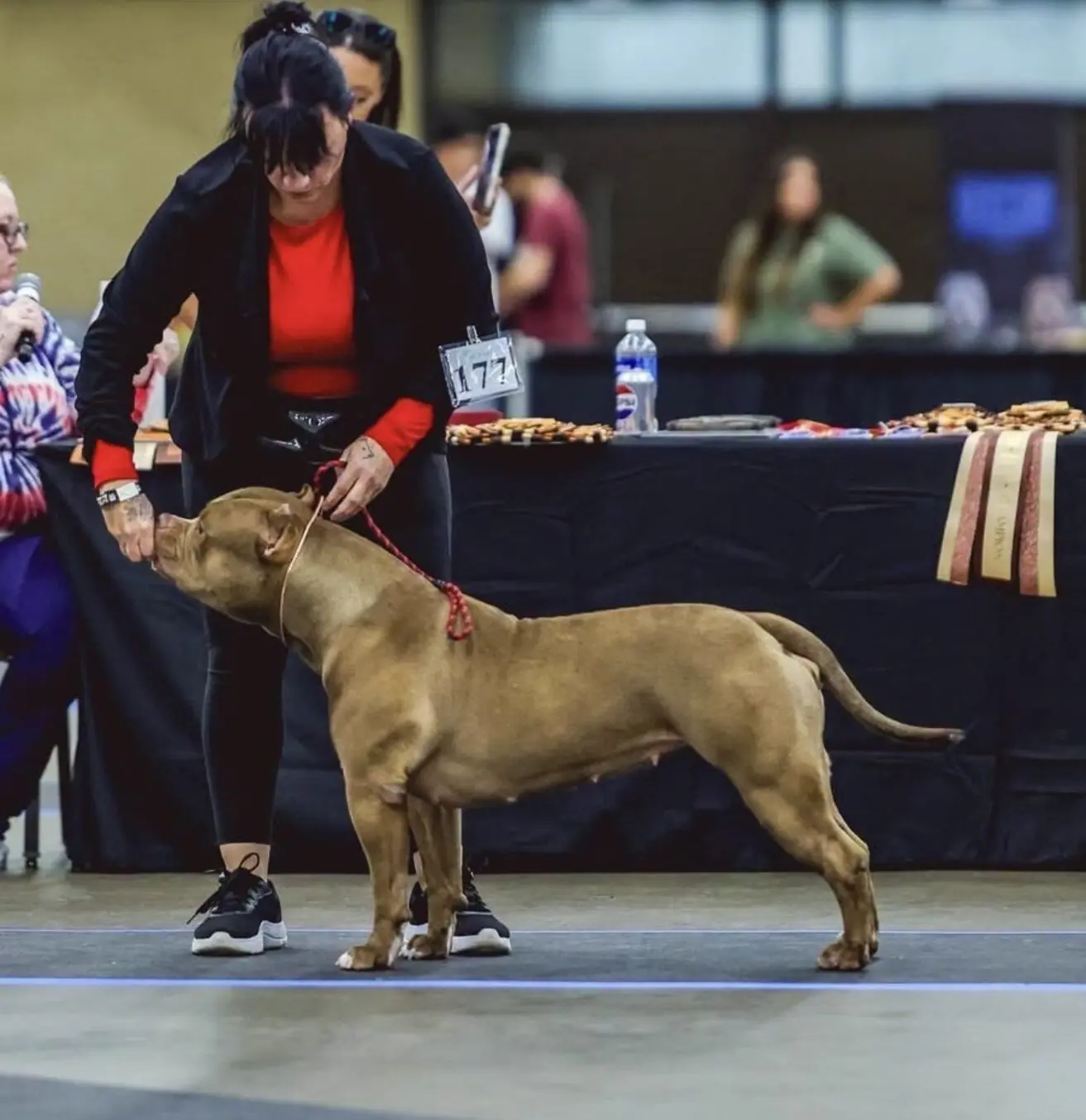
A dog may present an impressive silhouette when standing perfectly stacked, but it is during movement that many structural strengths and weaknesses become apparent.
This is why static and dynamic evaluations must complement each other in the conformation ring.
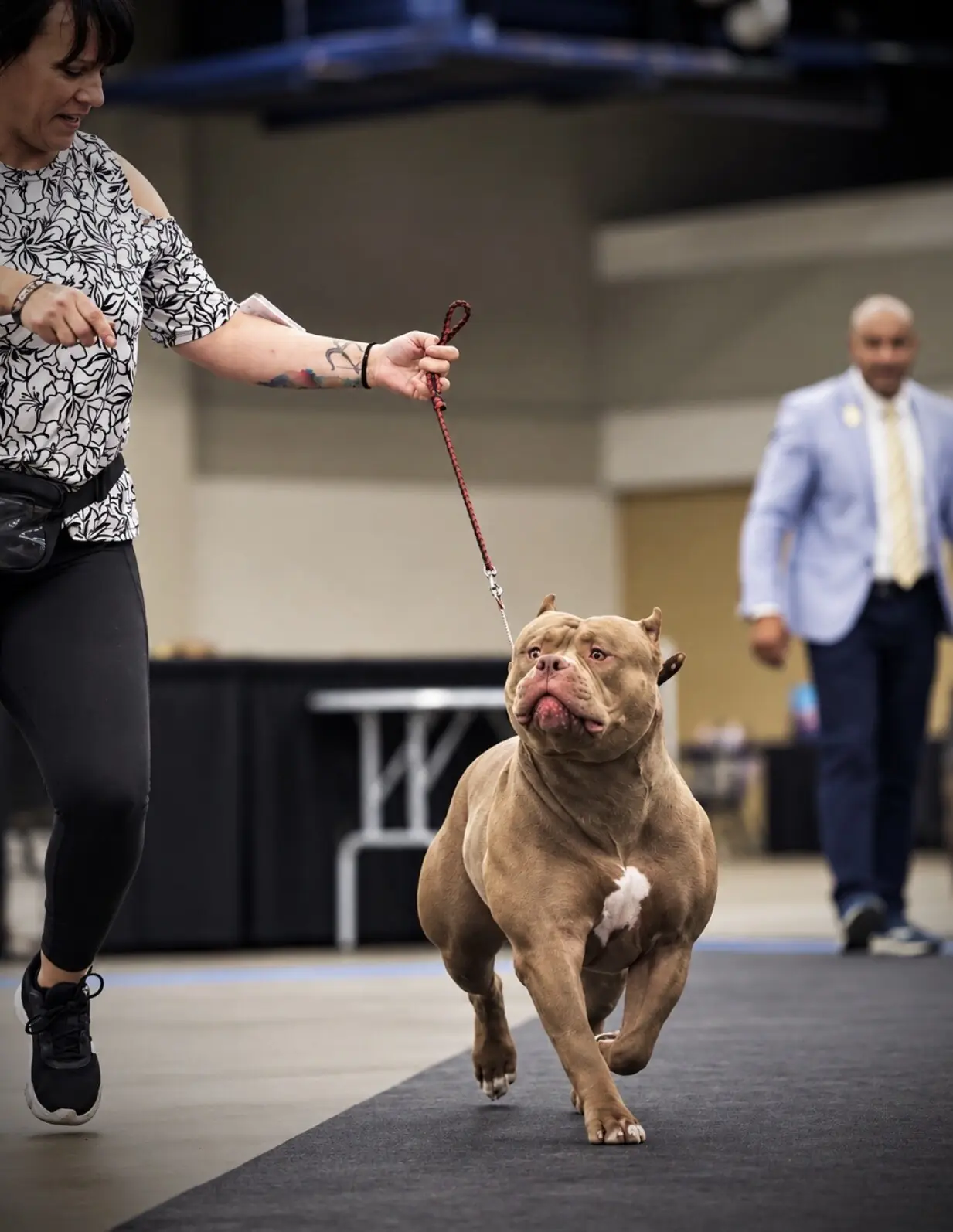
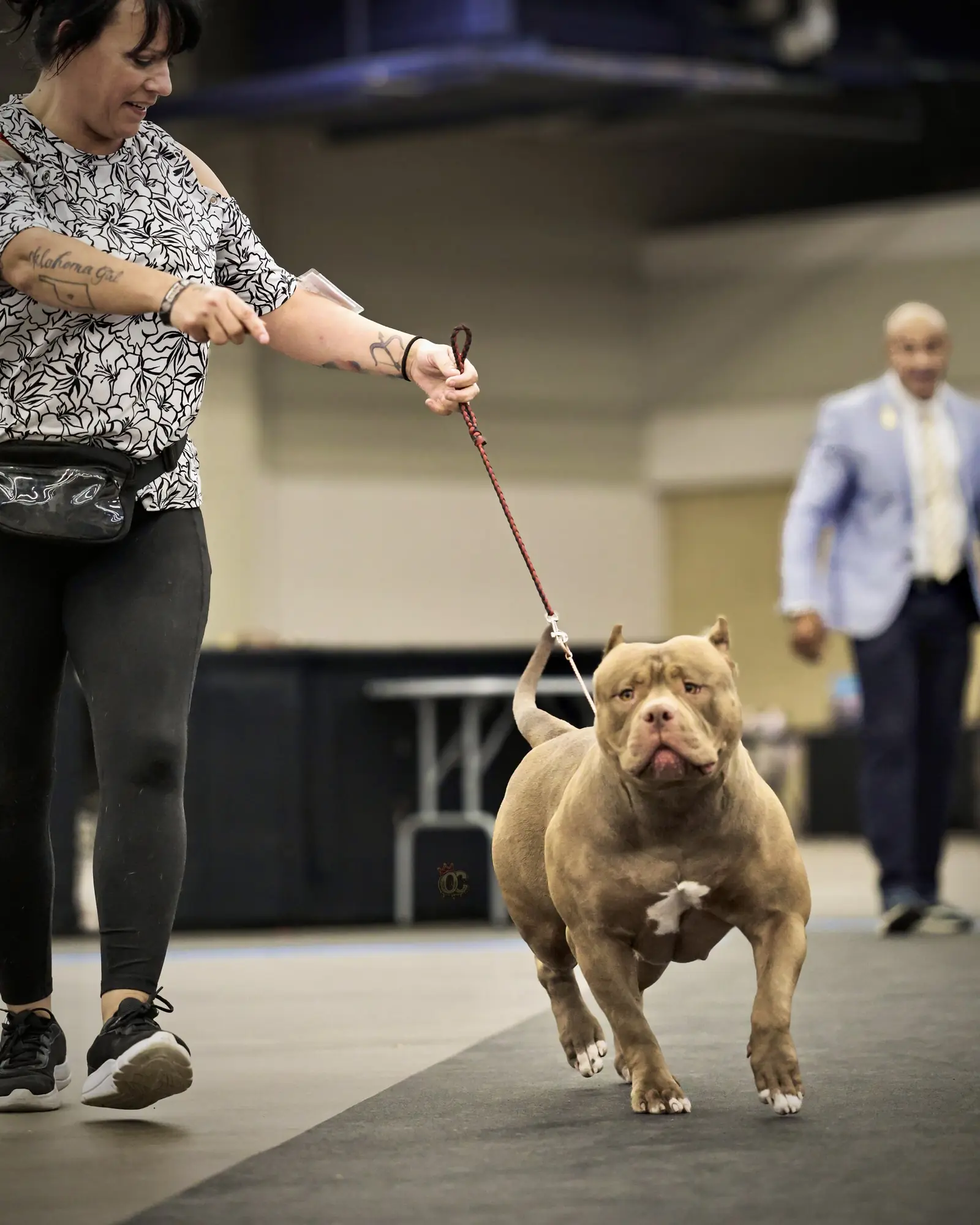
At the trot, judges should evaluate several essential characteristics:
* Front reach: Adequate forward extension of the forelimbs, supported by functional shoulder angulation and freedom of movement.
* Rear drive: Efficient propulsion generated through coordinated muscular action and proper extension of the hindquarter joints.
* Front-to-rear balance: Harmony between forward reach and rear propulsion, without excessive compensation.
* Topline stability: A firm, controlled topline that allows effective transmission of propulsive forces through the body.
* Stride length and cadence: Coordinated, fluid, ground-covering movement appropriate to the dog’s proportions and overall construction.
* Movement efficiency: Minimal wasted motion, without excessive lifting of the forelimbs, unnecessary lateral displacement, or exaggerated body roll.
True movement quality is not simply about producing the longest stride.
It is about converting muscular power into efficient locomotion through coordination, stability, and minimal energy expenditure.
A powerful dog should not have to move like a heavy dog.
On the contrary, an exceptionally constructed Brazilian Bull should surprise observers with the fluidity and apparent ease of its movement relative to its substantial muscular mass.
THE CHALLENGE OF EXTREME MORPHOLOGICAL FEATURES
Breeds characterized by exceptional muscular development demand particular attention to anatomical balance.
An excessively heavy front assembly, combined with an overly broad chest or improper angulation, may restrict the natural range of motion of the forelimbs.
Similarly, enormous hindquarter musculature does not automatically produce strong rear drive.
Effective propulsion depends on the relationship between skeletal construction, joint angulation, muscle function, and neuromuscular coordination.
A massive skull and exceptionally thick neck must also remain integrated into a proportional and functional body.
None of this means that breeders should eliminate the powerful characteristics that define the Brazilian Bull.
Quite the opposite.
The objective is to preserve breed type, muscular power, and imposing presence without allowing those characteristics to compromise soundness and functionality.
Well-developed musculature and correct conformation are not opposing qualities.
When properly selected, they complement one another.
WHY CONFORMATION SHOWS MATTER FOR THE FUTURE OF THE BREED
A conformation show should never be viewed simply as a competition to determine which dog is the most beautiful, the largest, or the most muscular.
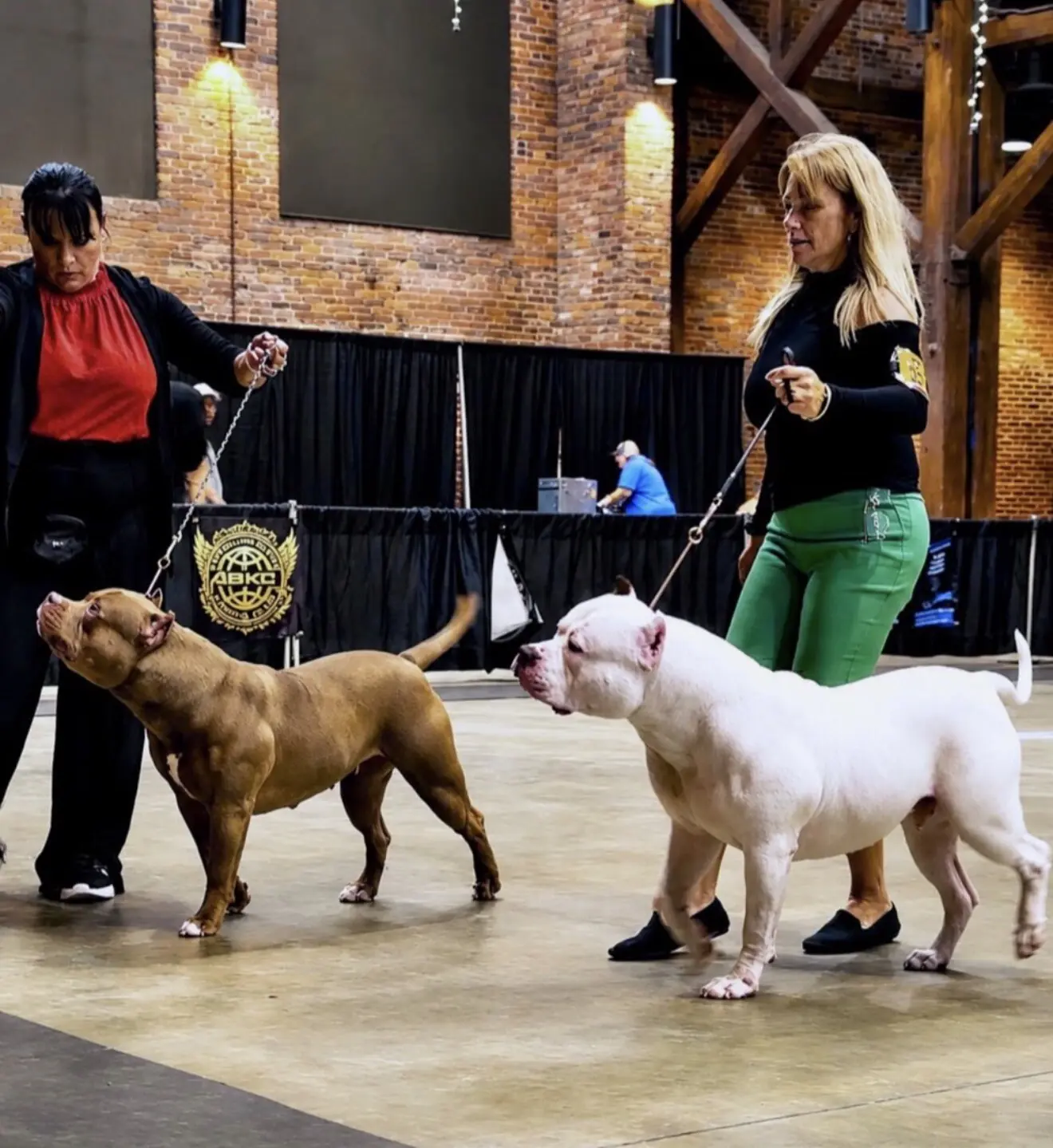
Its primary purpose is to evaluate how closely each dog represents the breed standard through breed type, proportions, balance, structural construction, movement, and overall condition.
For a breed such as the Brazilian Bull, which continues to develop greater consistency and uniformity in its phenotype, these evaluations are especially valuable.
Breeding decisions cannot rely exclusively on photographs, videos, or visual impressions.
Dogs must be evaluated in a natural standing position and properly stacked, with attention to their proportions, skeletal construction, limb placement, and overall balance.
Most importantly, their movement must be observed.
A knowledgeable judge with a solid understanding of functional anatomy and canine biomechanics can provide valuable insight into qualities that are not always obvious in static presentation.
Of course, winning a conformation title does not replace health screening, orthopedic evaluations, genetic testing, or long-term assessment of functional soundness.
Responsible breed development requires all these elements to be considered together.
WHAT TRULY DEFINES AN EXCEPTIONAL BRAZILIAN BULL?
From my perspective as a breeder and lifelong student of canine conformation, excellence in the Brazilian Bull should never be measured exclusively by head size, neck circumference, shoulder mass, or the volume of its hindquarter musculature.
These characteristics are part of the breed’s identity, but they cannot be evaluated independently.
What truly distinguishes an exceptional specimen is its ability to combine extraordinary physical characteristics into a harmonious and functional whole.
It is seeing a massive, breed-typical head supported by a correctly constructed neck and thoracic assembly.
It is observing exceptionally powerful shoulders without sacrificing freedom of movement.
It is identifying heavily developed hindquarters that generate effective propulsion rather than merely impressive muscular volume.
And perhaps most importantly, it is watching a dog of extraordinary muscular power perform a fluid, coordinated, balanced trot with an apparent lightness that seems almost contradictory to its physical mass.
Beauty lies in harmony. Power lies in muscular development. Excellence lies in making both work together.
THE RESPONSIBILITY OF BREEDING FOR THE FUTURE
Breeding Brazilian Bulls should never become a competition to produce the most extreme example of every individual physical characteristic.
The real challenge of selective breeding is achieving the correct combination of breed type, phenotypic consistency, health, temperament, structural soundness, and functionality.
This requires knowledge, observation, thoughtful breeding decisions, and the willingness to recognize both the strengths and weaknesses of our own dogs.
Conformation shows play an important role in this process because they allow breeders to compare their breeding objectives against independent evaluations and different interpretations of the breed standard.
For me, this is one of the most fascinating aspects of purebred dog breeding.
Producing a visually impressive dog is already a challenge.
Producing a visually impressive dog that demonstrates the same level of quality in motion as it does standing still is a far greater achievement.
Because a truly exceptional Brazilian Bull should not impress only when standing stacked. It should continue to impress with every stride.
And it is within this delicate balance between power, breed type, anatomical harmony, and biomechanical efficiency that I believe the future of the Brazilian Bull lies.
Áurea Regina Giacomelli
Samba Kennels
 (open larger photo)
 (open larger photo)
 (open larger photo)
 (open larger photo)