
Breeding Education & Puppy Care
Whelping Checklist: Essential Supplies and Preparation for Dog Breeders | Samba KennelsResponsible Breeder Should Have
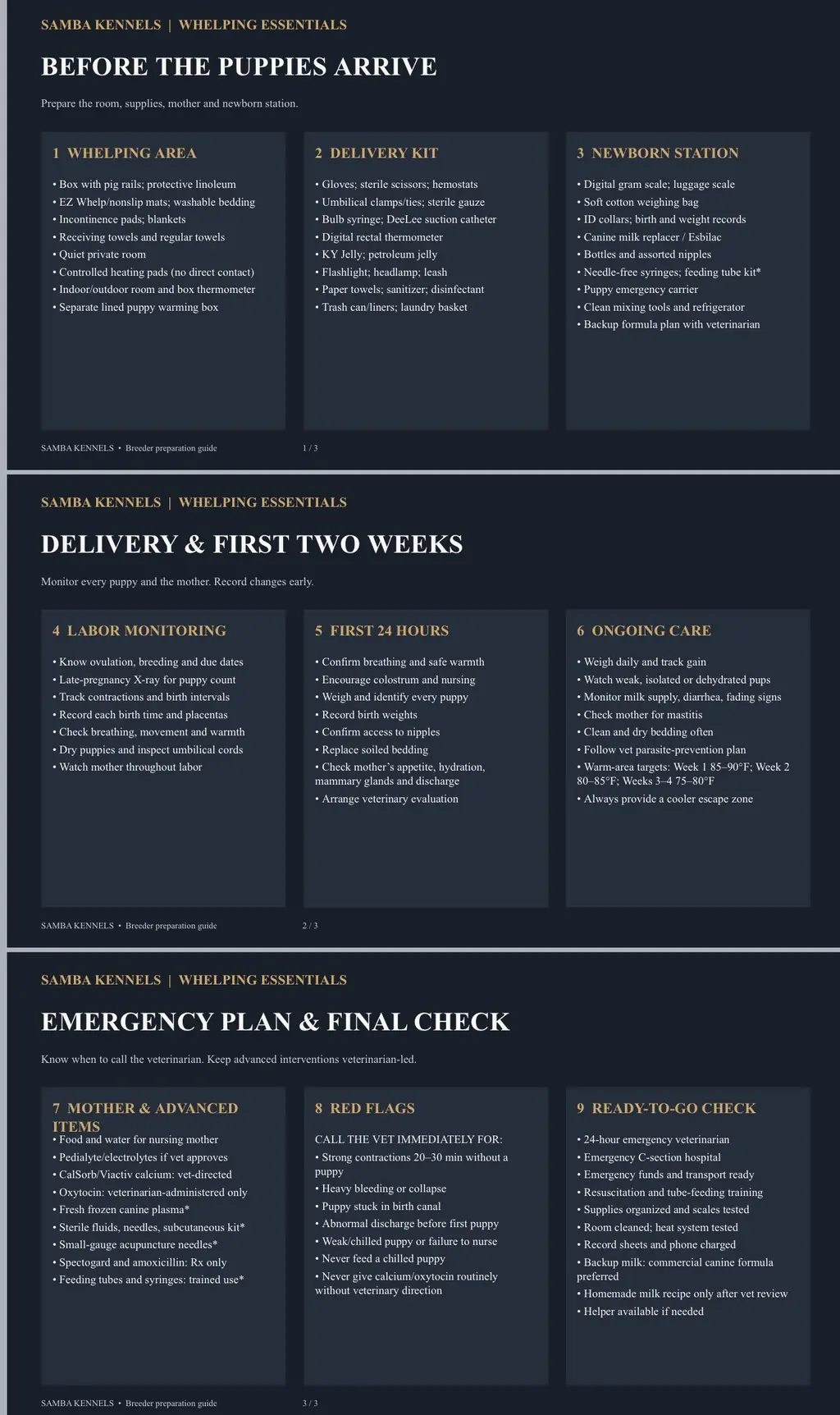
Bringing a litter of puppies into the world is one of the most rewarding experiences for a breeder. It is also one of the most demanding.
Successful whelping starts long before the first puppy arrives. Proper preparation, reliable equipment, a clean environment, and a clear emergency plan can make a significant difference in the safety of the mother and her puppies.
At Samba Kennels, we believe responsible breeding involves much more than selecting quality bloodlines. It requires planning, education, veterinary support, and careful attention to every stage of a puppy's development.
Whether you are preparing for your first litter or improving your existing breeding program, this guide covers the essential supplies and preparations every breeder should consider.
1. A Safe and Comfortable Whelping Box
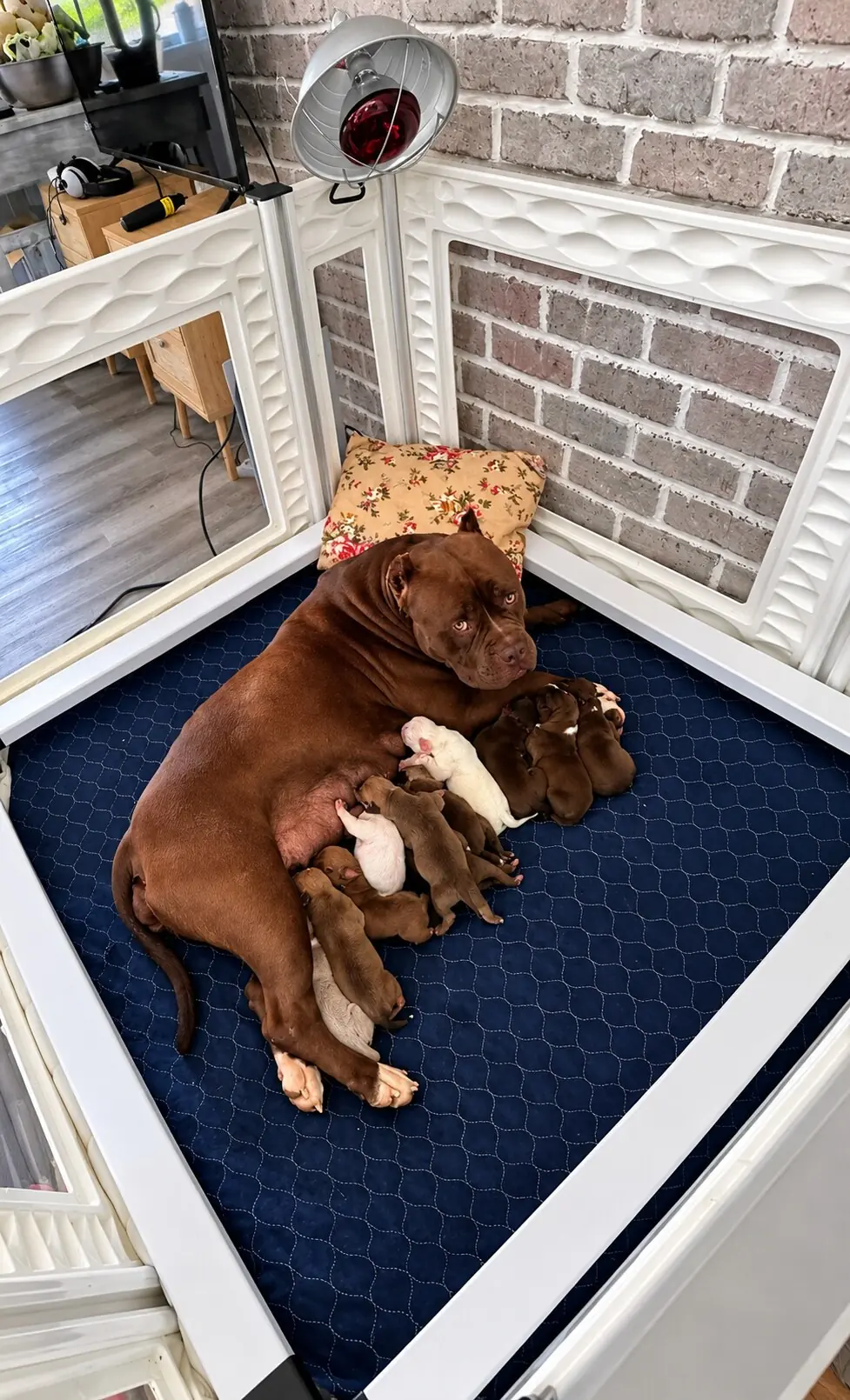
The whelping box is where the mother will deliver and care for her newborn puppies during their earliest weeks.
A properly designed box should provide enough room for the mother to stretch out comfortably while keeping the puppies protected.
Important features include:
- Adequate space for the mother's size and litter.
- Pig rails, also called puppy safety rails, to help reduce accidental crushing.
- Smooth, washable, nonporous surfaces.
- Secure sides that prevent newborn puppies from escaping.
- Easy access for cleaning and supervision.
- Nonslip, absorbent bedding.
For larger, muscular breeds such as the Brazilian Bull, American Bully, and Dogo Argentino, choosing the correct box dimensions is especially important.
The box should be installed at least one to two weeks before the expected delivery, allowing the mother time to become familiar with her surroundings.
2. Temperature Control and Heating Equipment
 (open larger photo)
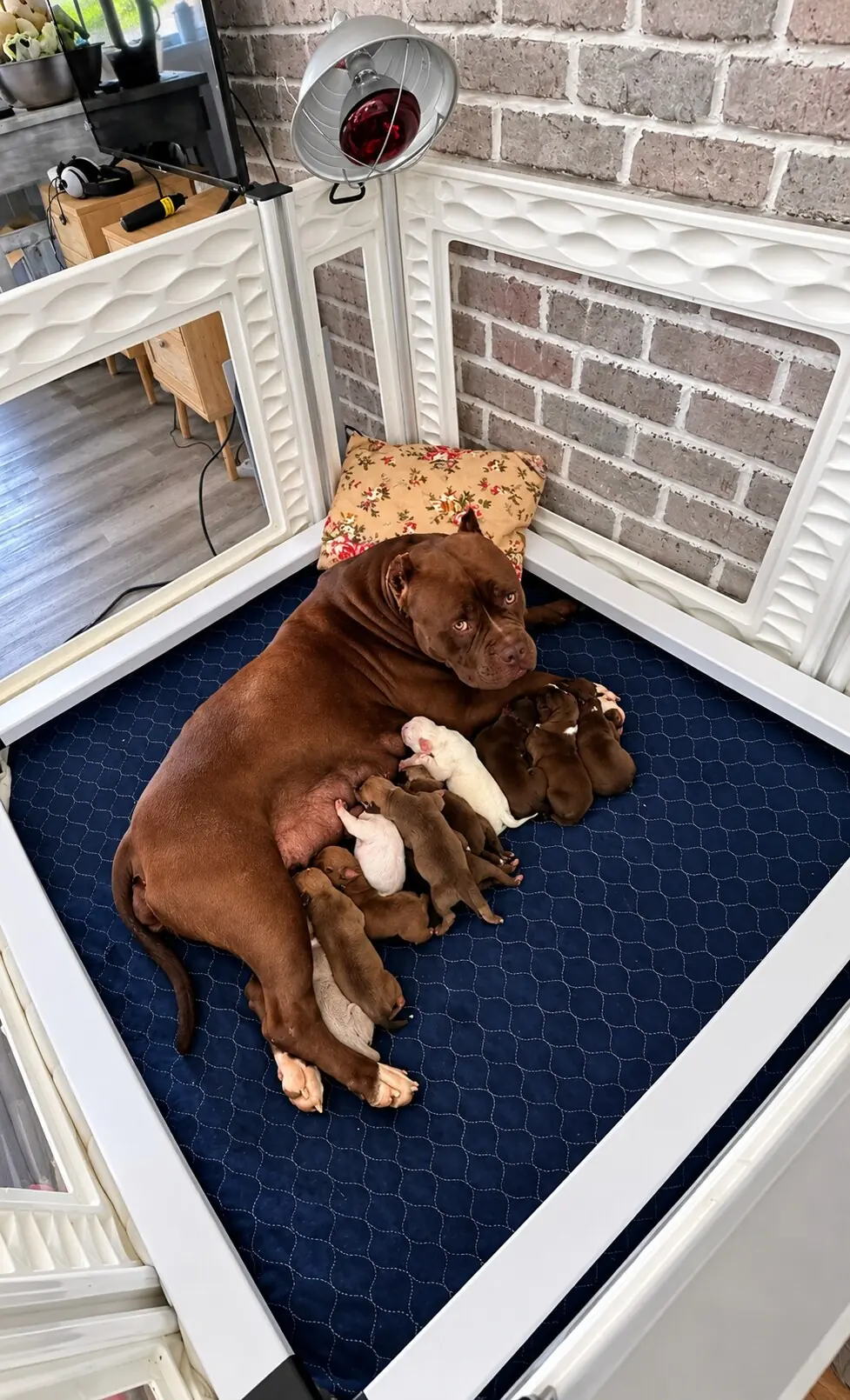
Newborn puppies cannot regulate their body temperature effectively. Maintaining a stable, appropriate environment is essential to their survival.
Your setup should include a reliable room thermometer and a safe, adjustable heating system.
General temperature guidelines for the puppy area
First week 85–90°F (29–32°C)
Second week 80–85°F (27–29°C)
Third to fourth week Gradually reduce toward 75–80°F (24–27°C)
These are general guidelines for the puppies' warm area, not necessarily the temperature of the entire room. Adjustments depend on the mother's comfort, puppy behavior, and veterinary guidance.
Always provide a cooler area where the mother and puppies can move away from the heat.
Avoid direct contact with heating pads or exposed heat sources. Overheating and burns can be just as dangerous as chilling.
3. Essential Whelping Supplies
 (open larger photo)
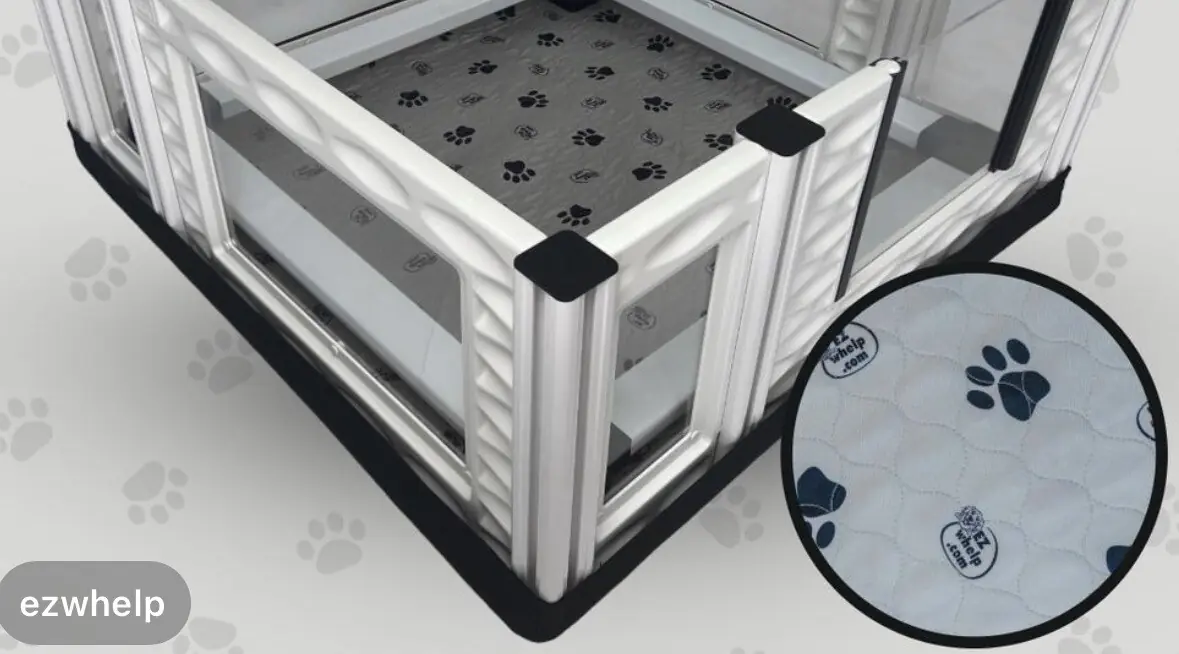
Having the correct equipment organized before labor begins allows the breeder to focus on the mother and puppies rather than searching for supplies during delivery.
Your whelping station should include:
- Clean, dry towels for gently drying puppies.
- Disposable examination gloves.
- Sterile gauze and absorbent pads.
- Sterile scissors and umbilical clamps or ties, if needed.
- A digital thermometer for monitoring the mother.
- A digital scale accurate in grams.
- A bulb syringe or appropriate neonatal suction device for use only when indicated.
- Water-based sterile lubricant.
- Clean bedding and disposable waste bags.
- A flashlight or adjustable examination light.
- A notebook or digital recordkeeping system.
Umbilical cord care, suctioning, and other interventions should follow veterinary instructions. Unnecessary intervention can injure newborn puppies.
4. Neonatal Puppy Care and Emergency Equipment
Even with careful planning, newborn puppies sometimes require additional assistance.
Breeders should discuss neonatal emergency procedures with their veterinarian before the delivery date.
Recommended preparations include:
- A safe warming container for temporary puppy care.
- A veterinarian-approved canine milk replacer.
- Suitable feeding equipment for puppies who cannot nurse normally.
- A clean transport carrier with safe temperature support.
- Emergency veterinary contact information.
- Access to a veterinary facility equipped for neonatal emergencies.
Tube feeding, oxygen administration, and neonatal resuscitation require specific training. They should not be attempted without appropriate instruction.
Never feed a chilled puppy. Seek veterinary guidance first, as feeding a hypothermic puppy can create serious complications.
5. Monitoring the Mother Before and During Labor
 (open larger photo)
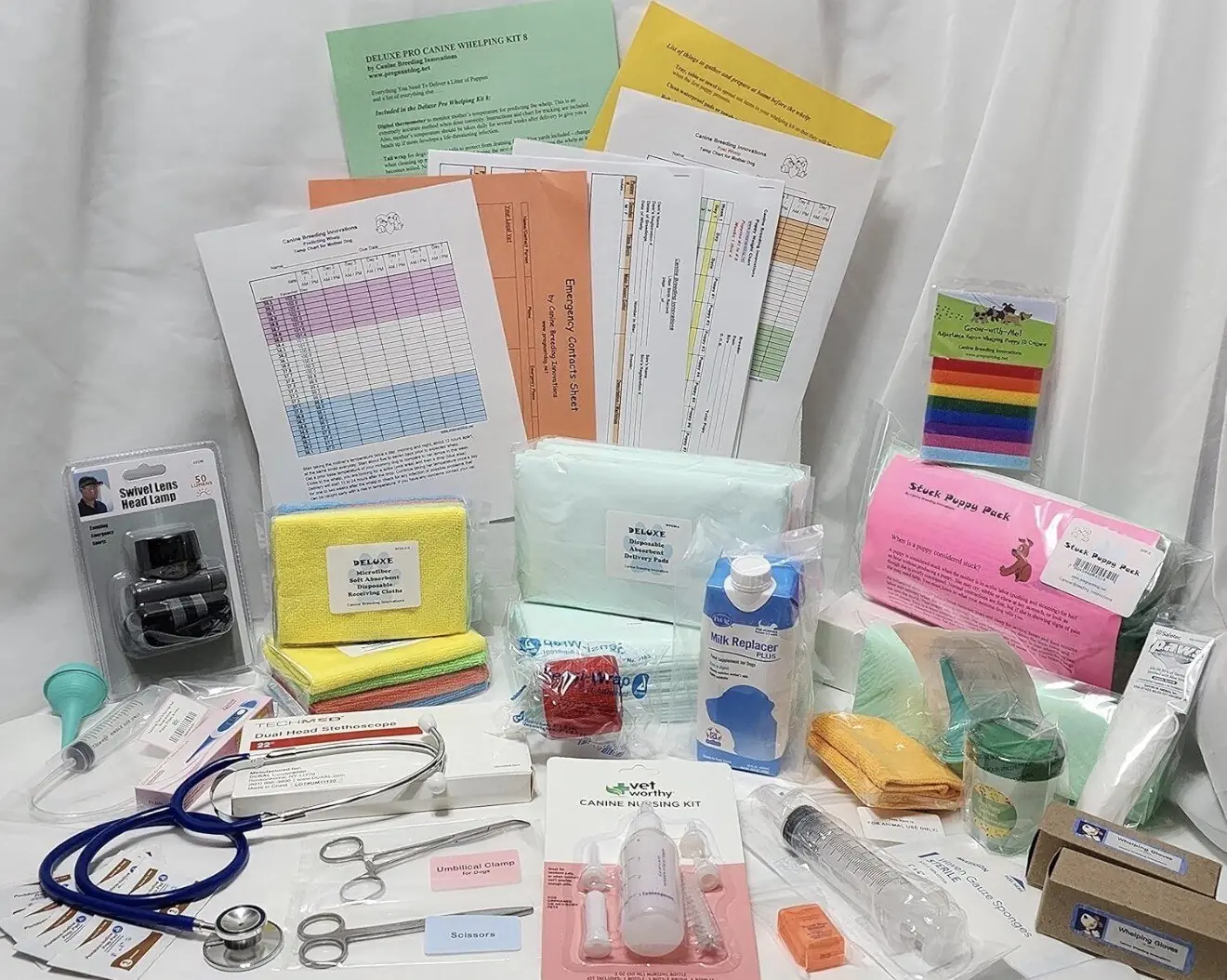
Understanding the mother's normal behavior and recognizing warning signs are fundamental parts of responsible breeding.
Before delivery, breeders should maintain records of the breeding dates, ovulation timing when available, veterinary examinations, and expected delivery window.
A veterinarian may recommend late-pregnancy imaging to evaluate the puppies and estimate litter size.
During labor, monitor the mother's behavior, contractions, discharge, and the timing of each puppy's arrival.
Seek immediate veterinary assistance if you observe:
- Strong, persistent contractions for 20–30 minutes without delivering a puppy.
- Green or black discharge before the first puppy without prompt delivery.
- Heavy bleeding, collapse, or severe distress.
- A puppy visibly stuck in the birth canal.
- Prolonged intervals between puppies when more are expected, especially with continued straining.
- Extreme weakness or abnormal breathing.
Some dogs require a planned or emergency cesarean section. Discuss this possibility with your veterinarian before labor begins, especially if the mother has a history of difficult deliveries.
6. Puppy Identification, Weight Monitoring, and Records
 (open larger photo)
Accurate records help breeders identify potential problems early and evaluate the development of each puppy.
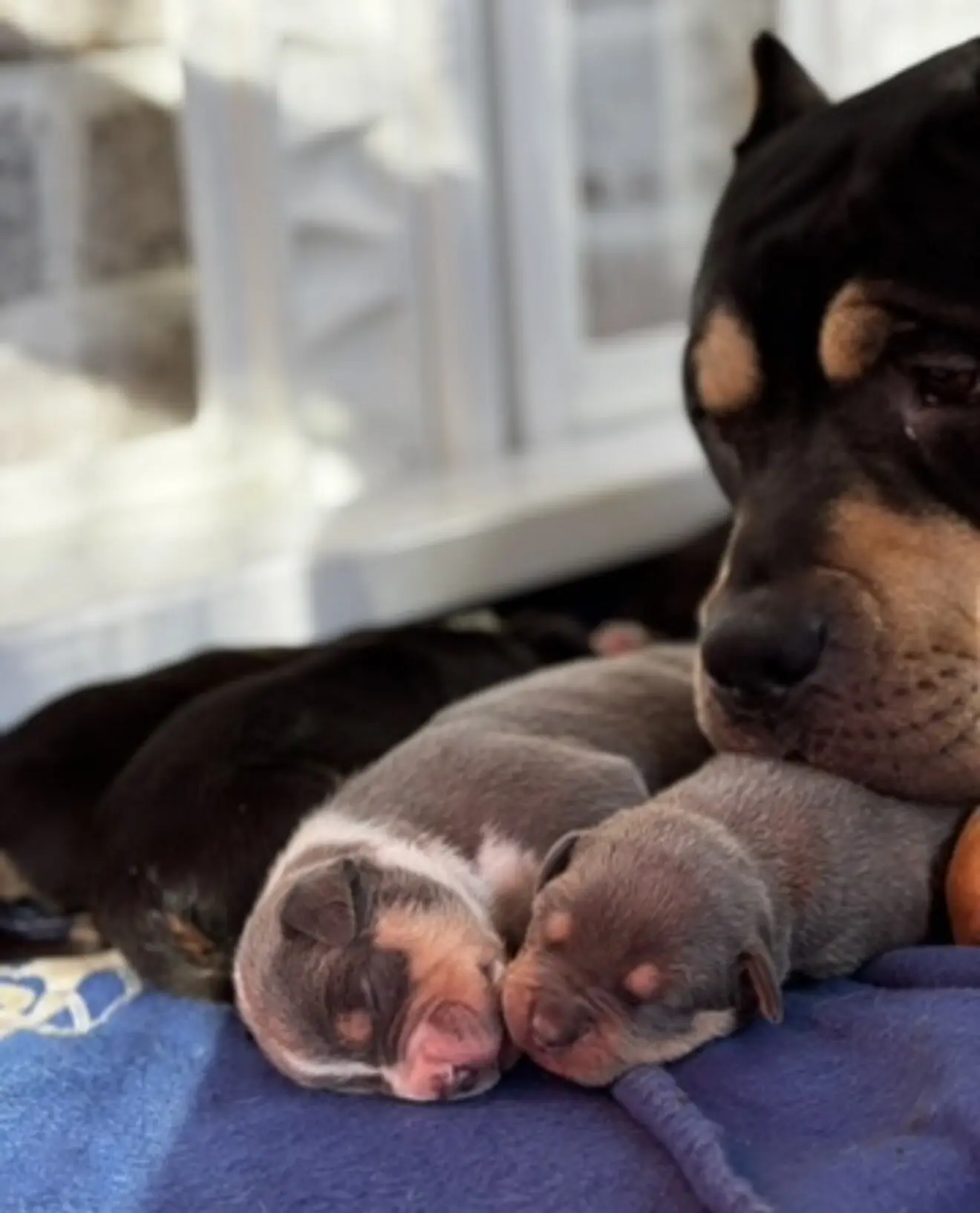
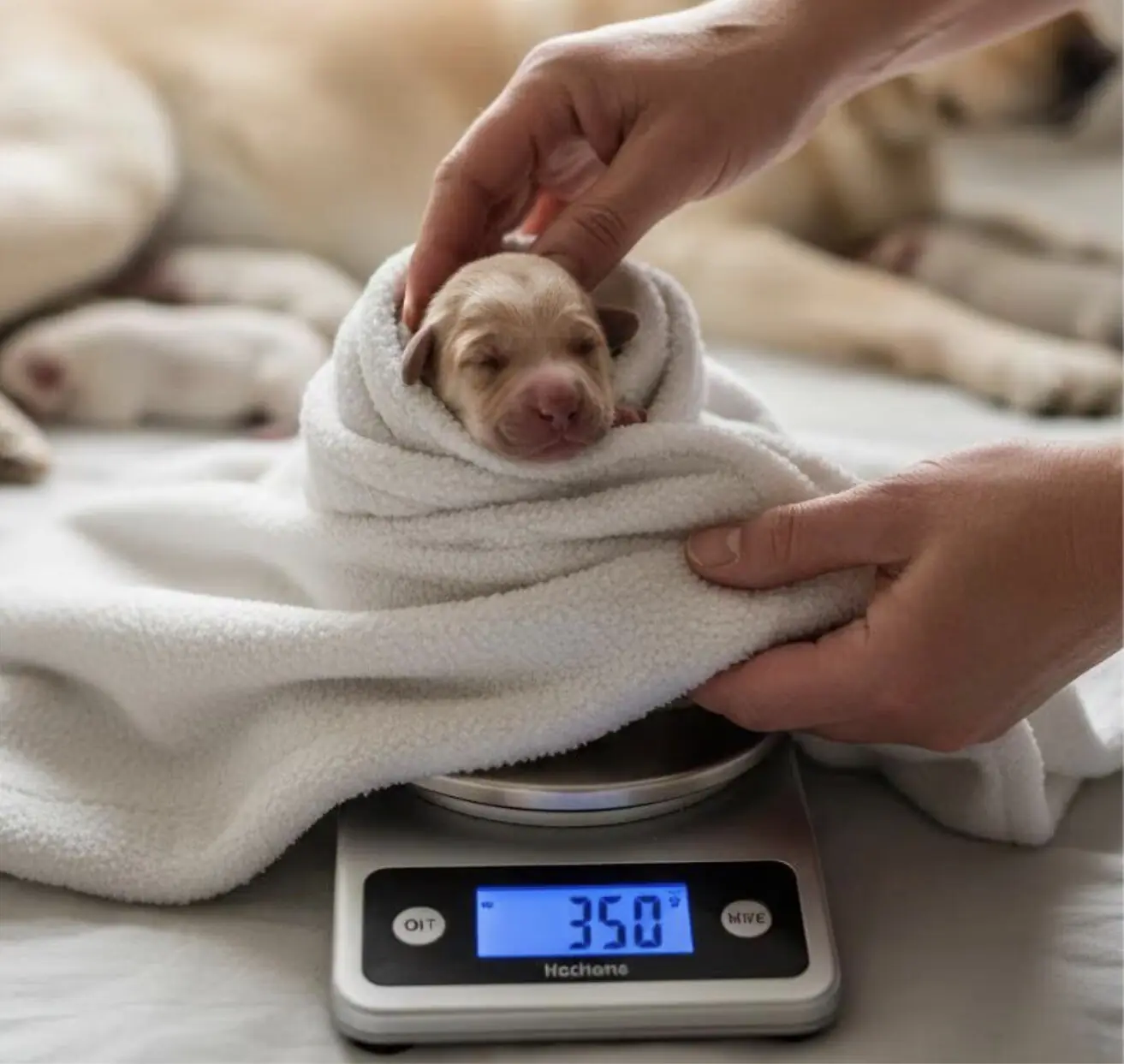
Each newborn should be individually identified and weighed soon after birth, once stable.
Record the puppy's birth time, sex, identifying markings, birth weight, and any observations about delivery or nursing.
Weigh puppies at least daily during the early neonatal period, using the same scale and a consistent routine.
Healthy newborn puppies generally gain weight steadily after the initial adjustment period. Failure to gain, persistent weight loss, weakness, or poor nursing requires prompt veterinary attention.
Soft, properly fitted identification collars may help distinguish puppies, but they must be checked frequently to prevent tightening or entanglement.
7. Hygiene and Infection Prevention
A clean environment is essential, particularly because newborn puppies have immature immune systems.
Prepare the room with washable surfaces, clean bedding, appropriate disinfectants, and dedicated cleaning equipment.
Keep the whelping area separate from high-traffic kennel spaces whenever possible.
Limit unnecessary visitors, wash hands before handling puppies, and avoid bringing equipment from other kennel areas without cleaning and disinfection.
Use veterinary-approved disinfectants according to their label instructions, including dilution, contact time, and rinsing requirements.
Fresh bedding should be available throughout the day, and soiled materials should be removed promptly.
8. Nutrition, Hydration, and Postpartum Care
The mother's nutritional needs increase substantially during late pregnancy and lactation.
Work with your veterinarian to select a complete, balanced diet appropriate for gestation and nursing. Fresh water should always be available.
After delivery, monitor the mother's appetite, temperature when indicated, behavior, mammary glands, and vaginal discharge.
Watch for symptoms such as painful or swollen mammary glands, fever, foul-smelling discharge, unusual weakness, tremors, or difficulty caring for the puppies.
These may indicate serious postpartum complications requiring veterinary attention.
Ensure that every puppy has access to nursing and receives colostrum as early as possible after birth. Colostrum provides important maternal antibodies during the first hours of life.
9. Prepare an Emergency Plan Before the First Contraction
Responsible breeders never assume that every delivery will proceed without complications.
Before the expected whelping date, confirm which veterinary hospital can provide emergency obstetric care, whether surgical services are available after hours, and how quickly you can reach the facility.
Have transportation ready, your veterinarian's phone number accessible, and funds available for emergency treatment.
Knowing when to seek professional help is just as important as knowing how to assist during a normal delivery.
10. The Samba Kennels Philosophy: Preparation Is Part of Responsible Breeding
 (open larger photo)
At Samba Kennels, our commitment to breeding extends beyond pedigree, structure, and appearance.
We believe the first responsibilities of a breeder are to protect the health of the mother, provide newborn puppies with the best possible start, and maintain the standards of care that every litter deserves.
Good breeding programs are built on informed decisions, consistent recordkeeping, appropriate veterinary care, and a willingness to continue learning.
No equipment can replace experience, observation, or qualified veterinary support. But proper preparation can help breeders recognize problems earlier and respond more effectively.
Every litter represents a responsibility. That responsibility begins before birth and continues long after the puppies leave the whelping box.
This article is intended for educational purposes and does not replace veterinary advice. Breeding, delivery, and neonatal care plans should always be developed with a qualified veterinarian.
 (open larger photo)